
Self Editing for Comic Book Writers (+32 More Writing Resources)
If you're still figuring out writing comics, this one's for you.

Hi there, Cici here!
It’s common at conventions for people to come up to our table and ask for advice on how to get started writing a comic script. Or they have a script, but they’re not sure how to finish it. If that’s you, you’ll want to read this week’s newsletter!
It’s a long one this week, so before we get into the meat of it, MythFall Issue 2 is launching in September, and you can follow the campaign here:

If you follow before launch you’ll get a free sticker sheet added to your pledge!
Learning to Write Comic Book Scripts Is Challenging
When I was writing a novel, there were a lot of resources I used to learn how to get better at writing prose. I wanted to learn the craft, so I took courses in school, read books on writing, and watched tutorials on YouTube. I also read a lot of fantasy and sci-fi books, which helped me learn what good prose could look like.
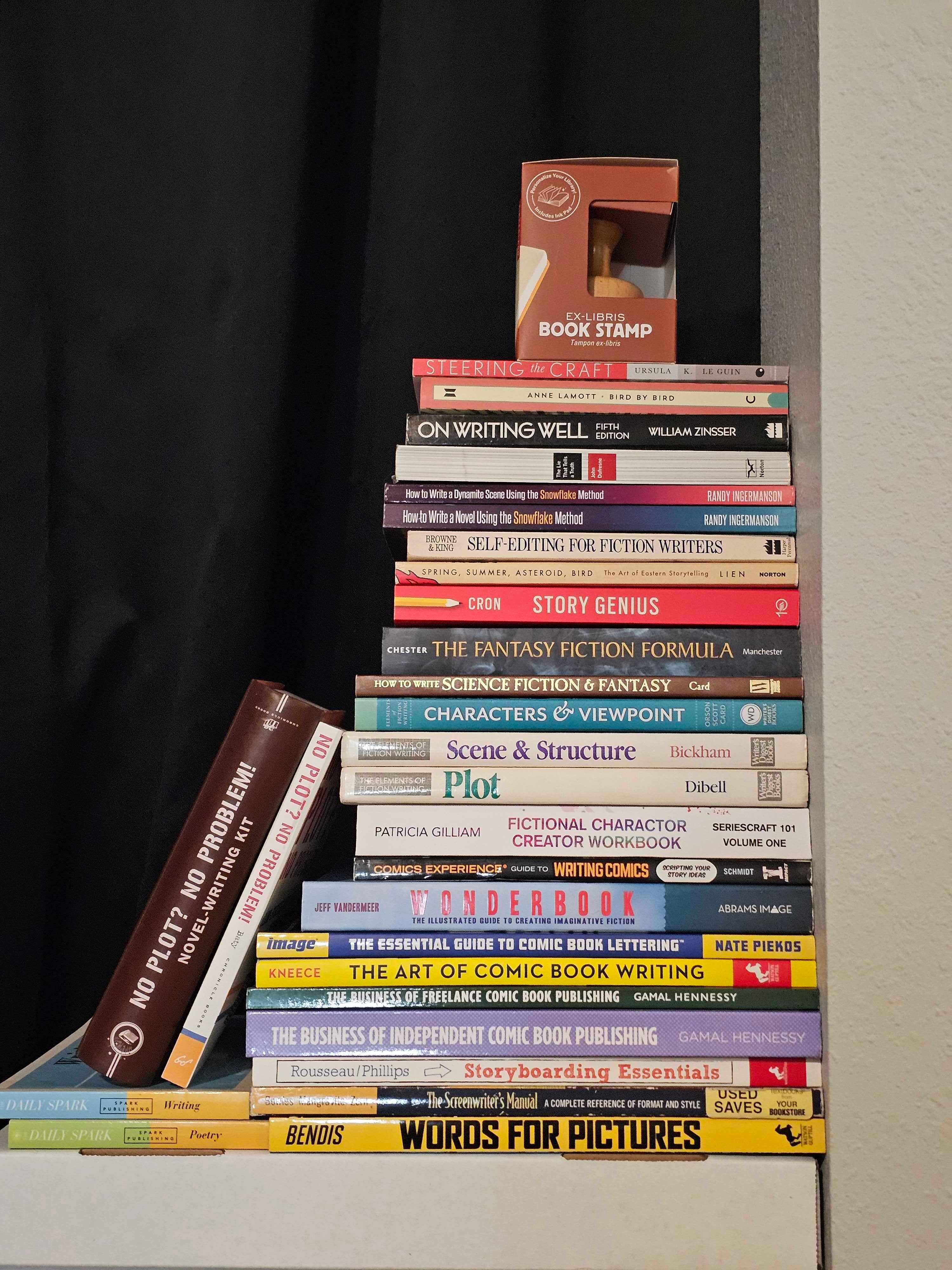
When I switched to writing comics, it was much harder to learn the conventions of script writing. Comic scripts are different than movie or TV scripts, and unlike those formats, there’s no strict layout to follow. We read books like Words For Pictures by Brian Michael Bendis and The Art of Comic Book Writing by Mark Kneece.
These books were great for helping us get started, but what we learned is that there’s no right way to write for comic books. The script is a set of instructions, or even a letter you write to the artist (or artists), and you can decide with your illustrator what form it should take. This is beautiful and true, but doesn’t provide a person with a lot of guidance. Besides, while there’s no right way to write comics, surely there’s a wrong way? (And surely it must be the way I’m doing it.)
Compounding this, while reading comics is a great way to learn how to tell stories in the medium, it’s rare to get ahold of a comic book script—especially a full one.
So how do you tell if your script is any good?
Is it getting the heart of your story across? Will the artist be able to follow it?
Mark took a comic book writing course with Comics Experience, and this is a great option if you have the time to devote to the course work. I’ve relied on my editors, Barbara Perez Marquez, Claire Napier, and James Powell, all of whom have been instrumental in elevating my script writing.
One ongoing problem I’ve had, though, is that the scripts are still in a pretty rough state when I deliver them to the editor. And I’m often rewriting them from scratch after the first round of edits. This can drag the process out for months.
What would be really great is if I had a better, more reliable way to evaluate and improve the script on my own before bringing an editor in.
If only there was a practical guide to self-editing for comic book writers.
Self-Editing for Comic Book Writers
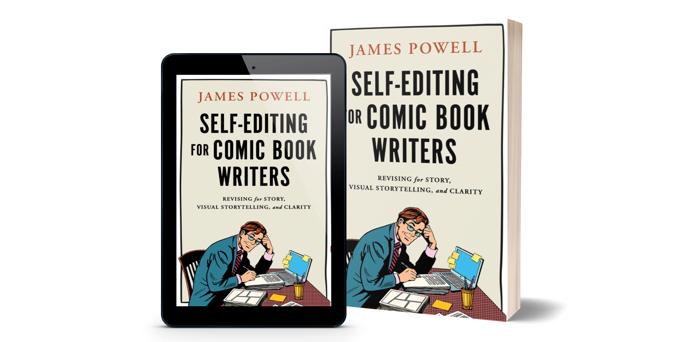
I had the opportunity to work with James Powell last year on the script for MythFall Interludes. I was too close to the story, and I needed an impartial pair of eyes to help me understand which direction the book should go in. It was a terrific experience that greatly improved the quality of the story we wanted to tell in this book.
James is a fantastic editor, and he’s written a book full of useful and practical advice for comic book writers. He goes over common mistakes and pitfalls he sees in indie comic scripts and how to correct them. It’s the book I wish I had when I first started writing scripts.
It’s live on Kickstarter now, and you can back it here:
I had the opportunity to read an advance copy of the book, and I learned so much that will level up my writing.
Here are some of the things I found especially useful:
A timeline of the basic editing process: Editing has stages! I knew this intuitively (e.g. do big structure changes before dialogue edits), but it was valuable to see the process broken down into steps and explained. This is going to help me communicate better about where I am in a draft, which will improve our ability to plan our publishing schedule. There were also several steps I was missing that had me delivering scripts rougher than they should have been, and causing delays at the lettering stage.
The Beat Sheet: We’ve done a fair amount of outlining before writing stories, but I’ve never gone back and re-outlined it after drafting to see if the major beats of the story still come through. This is a step I plan to do on all my full-length scripts going forward.
Some guidelines for how to choose a professional editor: Specifically, an explanation of different types of editing services and when to bring an editor into your project. When I was first getting started, it was hard to figure out how to find and choose an editor. I wasn’t sure what to expect and I mostly got lucky with my picks. I can now be more strategic about the kind of help I’m looking for.
When to use sound effects: This has been a big pain point for me. I’m fortunate to work with illustrator Allie Preswick, who has generously provided guidance in her pencils for where I need to add sound effects. I’m excited to have some direction on how sound effects work in the script and when they’re needed.
Panel description editing: Panel descriptions are another pain point. Sometimes it’s hard to understand what information needs to be there vs what’s overkill. This is covered by courses like comics experience, but I find the succinct list of problems to look out for very helpful.
Checklists after each chapter, and a checklist glossary at the end: This was one of the things I liked about The Snowflake Method book and I’m happy to see it here. The format is designed to be a practical guide. Once you read the book, you can put a bookmark in at the checklists section for a quick reference.
If that sounds promising, you can back the Kickstarter here:
32 Writing Resources (AKA Did we really read all those books on writing?)
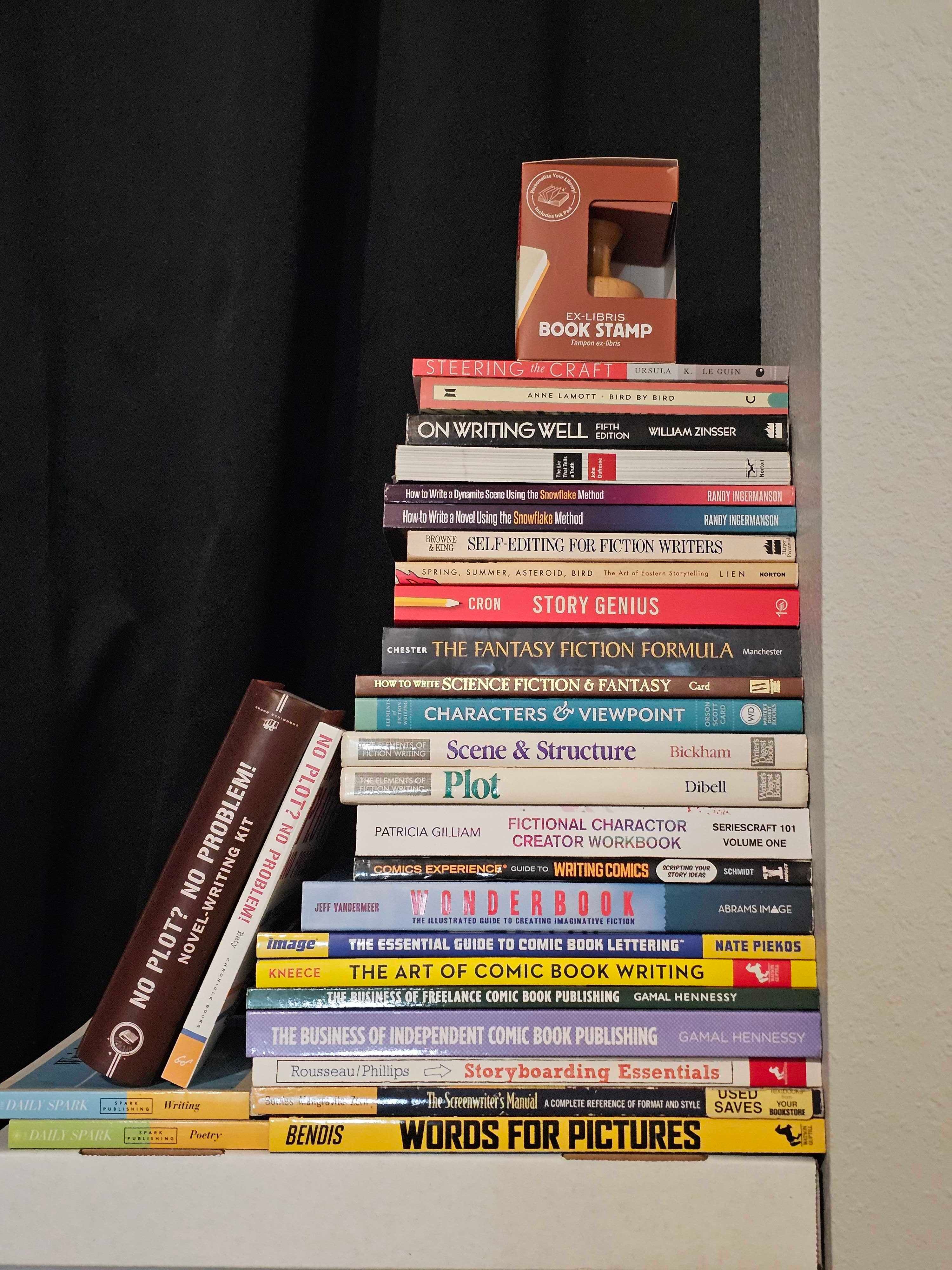
Out of the 24 books pictured, we’ve read 16 of them—about 60%. (It’s not a bad ratio, but having calculated it, I now want to improve.) I also found 3 more very helpful books not included in the picture and a few non-book resources we liked.
So which ones are the most useful for learning to write comic book scripts? And which ones are still on our TBR list?
Substack doesn’t handle tables well, so I put together a spreadsheet of all 321 of the resources— books and non books — along with whether I had read them and if they were helpful.

Have you read or used any of them? If so, I would love to know what you thought. Especially if I haven’t read them yet!
Are any on your To Be Read list?
Are there any writing books not on my radar that you’d recommend? Please let me know. Clearly, I am collecting them.
Dog Tax
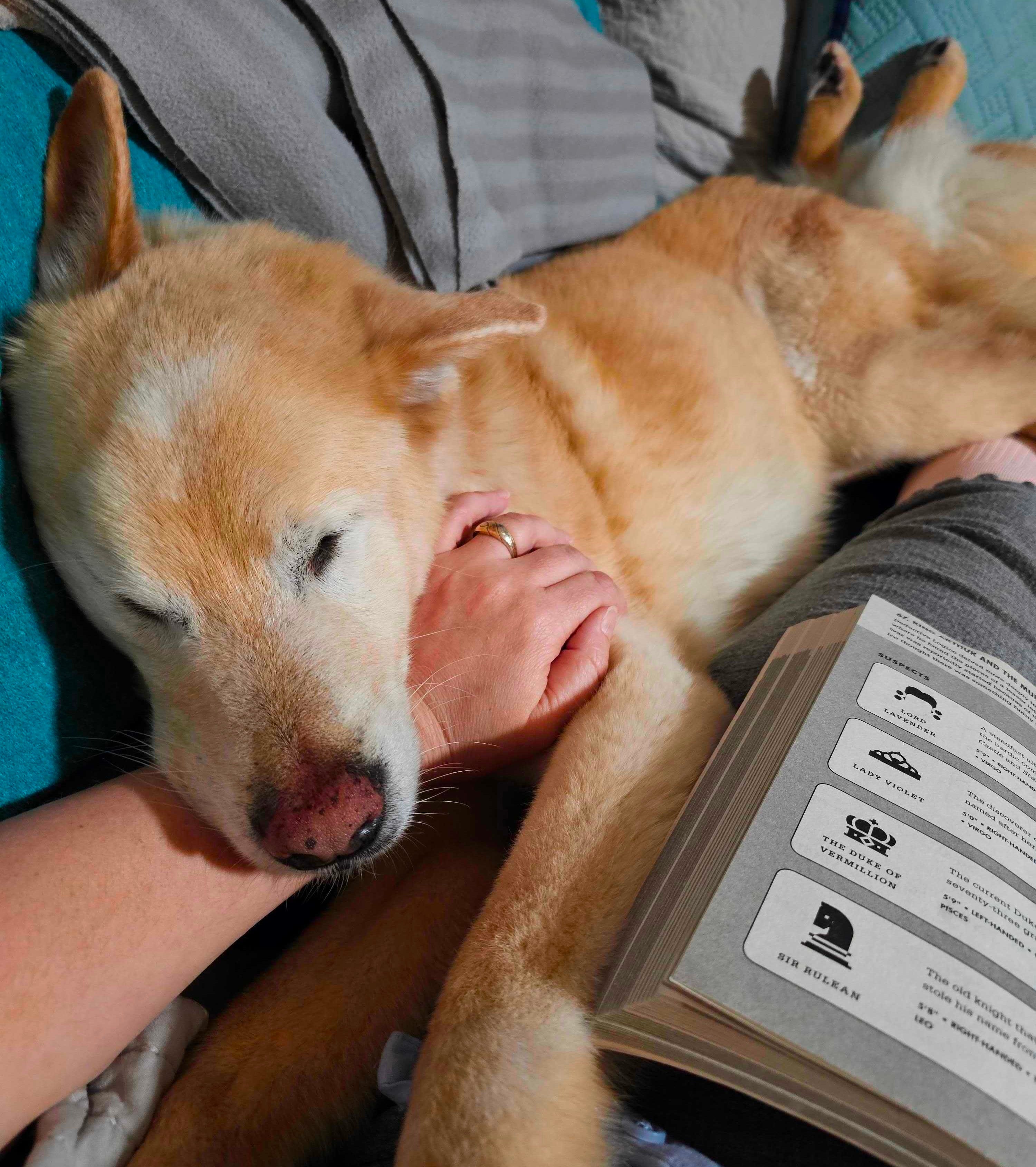
Luke has not read any books on writing, but sometimes he likes to nap on my hand while I’m doing a Murdle and, really, what more can you ask of him?
EDIT: It’s 33 now, plus I included Self-Editing for Writers on the list, so I guess that makes it 34? Look, I do words, not numbers. 😅
I'm glad you found some value from the book, Cici. It's always a little nerve-wracking to send a book into the world, and your comments tell me the time I put into it was worthwhile. I can't wait for more people to get the chance to read it.